Leh Ladakh — Where the Earth Ends and the Galaxy Begins
There are places you visit, and then there are places that visit you — long after you've returned home. Leh Ladakh is unquestionably the latter.
The moment my circuit was complete — from the ancient monasteries of Hemis to the windswept passes of Khardung La — I realized this wasn't just a trip. It was a conversation between my soul and the universe.
Every road in Leh tells a story. Winding through barren mountains, crossing rivers that rush like unfinished thoughts, the Leh circuit wraps around you like a warm embrace at 15,000 feet. Each turn reveals a landscape more breathtaking than the last — vast valleys painted in ochre and gold, prayer flags dancing silently in the cold mountain wind.
Step inside a Ladakhi monastery, and the world outside simply ceases to exist. The low hum of monks chanting, the golden glow of butter lamps, the centuries-old murals watching over you — it is a culture so deeply rooted, so beautifully unseen by the rushing world, that it leaves you humbled. Hemis, Thiksey, Diskit — each one a universe of its own.
Ladakh teaches you silence in the most profound way. No honking. No chaos. Just nature — raw, untouched, and magnificently alive. The stillness of Pangong Lake mirroring the sky, the gentle rustle of wind through ancient stupas, the echo of your own heartbeat against the mountains — this is peace in its purest form.
At night in Leh, the sky doesn't just have stars — it is stars. With zero light pollution and an altitude that brings you closer to the cosmos, the Milky Way stretches above you like a river of dreams. You don't just look at the galaxy here — you feel a part of it.
The people of Ladakh carry centuries of culture in their smiles. From the vibrant Thangka paintings to the warmth of a homestay kitchen, from the mystery of Tibetan Buddhism to the simplicity of Ladakhi cuisine — this is a world that exists quietly, beautifully, on its own terms. Unseen by many. Unforgettable to those who find it.
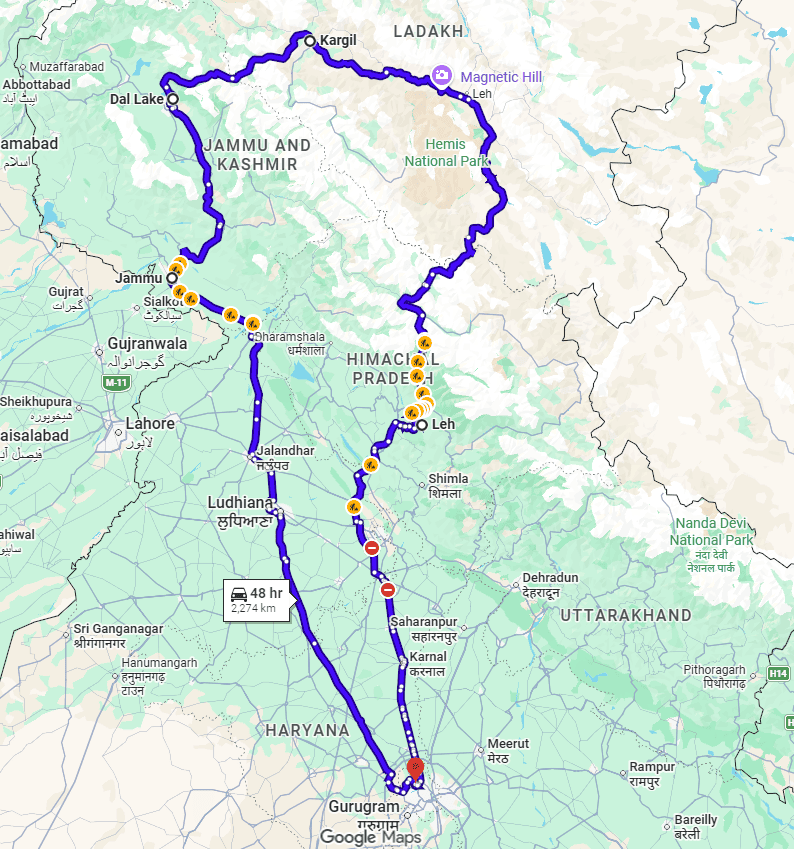
The Grand Circuit
Some trips are planned on paper. Some are written by the road itself. The Delhi – Manali – Leh – Kargil – Jammu – Delhi circuit belongs entirely to the second kind.
This is not just a road trip. This is a pilgrimage through the spine of India — through mountains that touch the heavens, through valleys that hold centuries of silence, through roads that test everything you think you know about yourself. Strap in. This one is for keeps.
Delhi - Where it All Begins
Every great adventure has a humble beginning. Ours starts in the beautiful chaos of Delhi — the city that never truly sleeps, never truly quiets, and never lets you leave without a story.
The night before departure, the excitement is electric. Maps are checked one final time. Bags are repacked. The motorcycle is fuelled. And somewhere between the last cup of chai and the first breath of midnight air, the journey begins in your heart — long before the wheels start rolling.
Delhi to Manali
Approximately 570 kilometers of changing landscapes, rising altitudes, and growing anticipation. The plains give way to foothills. The foothills bow to the mountains. And just like that, the world you knew begins to fade beautifully in the rearview mirror.
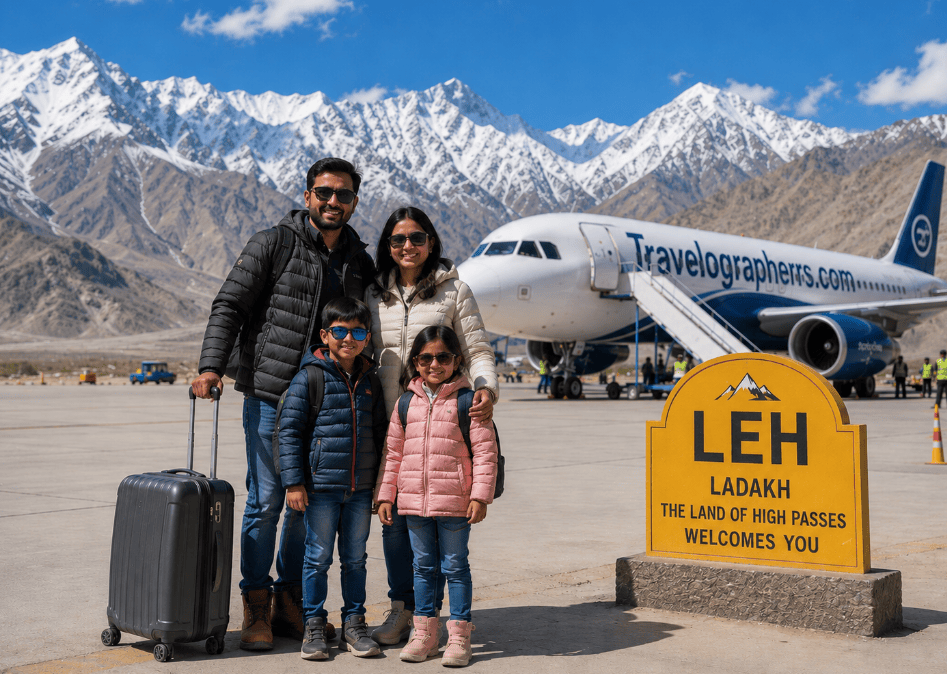
The Family Man
Some trips are planned on paper. Some are written by the road itself. The Delhi – Manali – Leh – Kargil – Jammu – Delhi circuit belongs entirely to the second kind.
This is not just a road trip. This is a pilgrimage through the spine of India — through mountains that touch the heavens, through valleys that hold centuries of silence, through roads that test everything you think you know about yourself. Strap in. This one is for keeps.
Delhi — Where It All Begins
Every great adventure has a humble beginning. Ours starts in the beautiful chaos of Delhi — the city that never truly sleeps, never truly quiets, and never lets you leave without a story.
The night before departure, the excitement is electric. Maps are checked one final time. Bags are repacked. The motorcycle is fuelled. And somewhere between the last cup of chai and the first breath of midnight air, the journey begins in your heart — long before the wheels start rolling.
Delhi to Manali — approximately 570 kilometres of changing landscapes, rising altitudes, and growing anticipation. The plains give way to foothills. The foothills bow to the mountains. And just like that, the world you knew begins to fade beautifully in the rearview mirror.
Manali — The Gateway to the Gods
Manali greets you like an old friend — warm, familiar, and full of promise. Nestled in the Kullu Valley at 2,050 metres, it is the last outpost of comfort before the real adventure begins. The air here already tastes different — crisp, pine-scented, electric with possibility.
Spend a day here. Walk through Old Manali. Sip coffee by the Beas River. Visit the ancient Hadimba Devi Temple, tucked inside a forest of towering deodar trees. Let the mountains ahead call to you slowly — because tomorrow, you answer.
The night before Rohtang, sleep comes reluctantly. The road is waiting.
Manali to Leh — The Most Magnificent Road on Earth
475 kilometres. Two days. A lifetime of memories.
This is it. The road that bucket lists are made of. The Manali–Leh Highway is not a road so much as it is a living, breathing experience — one that demands your complete attention and rewards you with absolute wonder.
Day One — Manali to Jispa/Keylong
The morning begins with Rohtang Pass — at 3,978 metres, your first taste of what lies ahead. Snow-capped, cloud-kissed, and achingly beautiful. But Rohtang is merely the opening act.
Beyond lies Baralacha La at 4,890 metres — where the air thins, the road narrows, and the landscape turns otherworldly. Brown and grey mountains stretch endlessly in every direction. No trees. No settlements. Just raw, savage, spectacular emptiness.
Camp or stay at Jispa — a tiny hamlet by the Bhaga River. Fall asleep to the sound of rushing glacial water and a sky absolutely drowning in stars.
Day Two — Jispa to Leh
This is the day the road truly reveals its soul.
- ⛰️ Nakee La — 4,739 metres. The silence here is absolute.
- 🏔️ Lachulung La — 5,059 metres. You are now above the clouds.
- 🌊 Pang — A flat, surreal valley that feels like another planet entirely.
- 🗺️ More Plains — Miles of high-altitude flatlands that stretch your disbelief.
- 🚩 Tanglang La — 5,328 metres. The second highest motorable pass in the world. The air here is thin enough to make every breath feel earned.
And then — finally, gloriously — Leh appears in the valley below. Like a dream you've been chasing for days, suddenly, magnificently real.
Leh — The Soul of Ladakh
You've arrived. And nothing — no photograph, no travel show, no friend's description — could have prepared you for this.
Leh sits at 3,524 metres, cradled by barren mountains and lit by a sun that feels closer here than anywhere else on earth. The ancient Leh Palace watches over the city like a silent guardian. The Main Bazaar hums with the quiet energy of monks, travellers, and locals going about their beautiful, unhurried lives.
Spend at least three days here. Your body needs acclimatisation. Your soul needs time.
- 🏯 Leh Palace — Modelled on Tibet's Potala Palace, it is history you can touch
- 🕌 Shanti Stupa — Watch the sunset paint the mountains in impossible colours
- 🛕 Hemis Monastery — The largest, most magnificent monastery in Ladakh
- 🌄 Thiksey Monastery — Rise early, witness the monks at morning prayer
- 🏔️ Khardung La — At 5,359 metres, the world's highest motorable road. Stand here and feel genuinely invincible.
- 💧 Pangong Lake — That legendary shade of blue that no camera in the world can truly capture
Leh doesn't just fill your itinerary. It fills something far deeper.
Leh to Kargil — Through the Valley of Warriors and Saints
240 kilometres. One unforgettable day.
Leaving Leh is never easy. But the road to Kargil has its own extraordinary story to tell — and it tells it loudly, beautifully, and with great pride.
The highway follows the mighty Indus River — one of the world's great rivers, rushing silver and fierce through the barren mountains. Every bend in the road reveals a new postcard — ancient monasteries perched on impossible cliffs, tiny villages clinging to hillsides, prayer flags fluttering their colourful blessings into the wind.
Lamayuru Monastery — the Moonland Monastery — emerges from a landscape so lunar, so alien, that you instinctively slow down and stare. This is one of the oldest and most dramatic monasteries in all of Ladakh. The eroded, cave-pocked mountains surrounding it look like something sculpted by a giant, dreaming hand.
And then — Kargil.
At 2,676 metres, Kargil sits at the crossroads of history and heroism. The town is modest and unhurried, but the mountains surrounding it carry the weight of stories — stories of unimaginable bravery, of a nation tested, of soldiers who stood their ground at the top of the world.
Visit the Kargil War Memorial at Dras — the second coldest inhabited place on earth. Stand in silence before the names engraved on stone. Let gratitude wash over you completely.
Kargil reminds you that some roads were bought with a price far greater than petrol.
Kargil to Jammu — Where the Mountains Say Goodbye
490 kilometres. A bittersweet descent.
This is the day the mountains begin to release you — slowly, reluctantly, as if they too are not quite ready to let you go.
The road through Zoji La Pass at 3,528 metres is breathtaking in every sense — steep, narrow, dramatic, and absolutely not for the faint-hearted. Beyond it, the landscape softens gradually. Green returns. Trees reappear. The air thickens with warmth.
Through Sonamarg — Kashmir's golden meadow, glittering with wildflowers and glacial streams. Through Srinagar — the City of Lakes, where shikaras drift lazily across Dal Lake and the world seems to move at the pace of a gentle breeze.
And then the final descent — through the Banihal Pass and the famous Jawahar Tunnel — into the warmth of Jammu, the City of Temples.
Jammu feels like a warm hug after weeks of cold mountain air. The famous Vaishno Devi Temple, the vibrant street food, the colourful bazaars — it is India at its most exuberant, most celebratory, most alive.
Stay a night. Eat well. Sleep long. Because tomorrow, the last road awaits.
Jammu to Delhi — The Return of the Wanderer
600 kilometres. The longest short road you'll ever travel.
The highway back to Delhi is smooth and fast — everything the mountain roads were not. And somehow, that smoothness feels strange now. Your hands still grip the wheel like there's a cliff around every corner. Your eyes still scan every horizon for a mountain pass.
The plains open up wide and flat around you. The heat of the Punjabi heartland settles in. And somewhere on that long, straight road — between Pathankot and Ludhiana, between Ambala and Panipat — it hits you.
You are different now.
Not dramatically. Not obviously. But somewhere in the thin air of Tanglang La, somewhere in the flickering butter lamps of Hemis, somewhere under the galaxy at Pangong, somewhere at the Kargil War Memorial with tears you didn't expect — something shifted. Something settled. Something healed.
Delhi appears on the horizon — its skyline familiar, its chaos welcoming. The circuit is complete. The road has given you everything it promised and more.
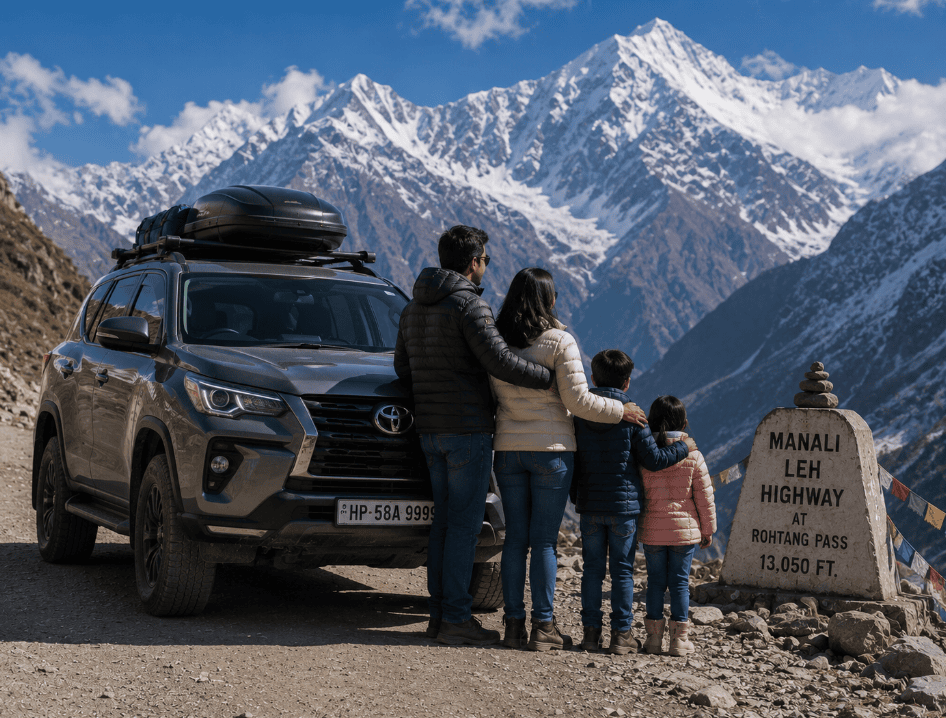
The Grand Circuit for Car Lovers
Some trips are planned on paper. Some are written by the road itself. The Delhi – Manali – Leh – Kargil – Jammu – Delhi circuit belongs entirely to the second kind.
This is not just a road trip. This is a pilgrimage through the spine of India — through mountains that touch the heavens, through valleys that hold centuries of silence, through roads that test everything you think you know about yourself. Strap in. This one is for keeps.
Delhi — Where It All Begins
Every great adventure has a humble beginning. Ours starts in the beautiful chaos of Delhi — the city that never truly sleeps, never truly quiets, and never lets you leave without a story.
The night before departure, the excitement is electric. Maps are checked one final time. Bags are repacked. The motorcycle is fuelled. And somewhere between the last cup of chai and the first breath of midnight air, the journey begins in your heart — long before the wheels start rolling.
Delhi to Manali — approximately 570 kilometres of changing landscapes, rising altitudes, and growing anticipation. The plains give way to foothills. The foothills bow to the mountains. And just like that, the world you knew begins to fade beautifully in the rearview mirror.
Manali — The Gateway to the Gods
Manali greets you like an old friend — warm, familiar, and full of promise. Nestled in the Kullu Valley at 2,050 metres, it is the last outpost of comfort before the real adventure begins. The air here already tastes different — crisp, pine-scented, electric with possibility.
Spend a day here. Walk through Old Manali. Sip coffee by the Beas River. Visit the ancient Hadimba Devi Temple, tucked inside a forest of towering deodar trees. Let the mountains ahead call to you slowly — because tomorrow, you answer.
The night before Rohtang, sleep comes reluctantly. The road is waiting.
Manali to Leh — The Most Magnificent Road on Earth
475 kilometres. Two days. A lifetime of memories.
This is it. The road that bucket lists are made of. The Manali–Leh Highway is not a road so much as it is a living, breathing experience — one that demands your complete attention and rewards you with absolute wonder.
Day One — Manali to Jispa/Keylong
The morning begins with Rohtang Pass — at 3,978 metres, your first taste of what lies ahead. Snow-capped, cloud-kissed, and achingly beautiful. But Rohtang is merely the opening act.
Beyond lies Baralacha La at 4,890 metres — where the air thins, the road narrows, and the landscape turns otherworldly. Brown and grey mountains stretch endlessly in every direction. No trees. No settlements. Just raw, savage, spectacular emptiness.
Camp or stay at Jispa — a tiny hamlet by the Bhaga River. Fall asleep to the sound of rushing glacial water and a sky absolutely drowning in stars.
Day Two — Jispa to Leh
This is the day the road truly reveals its soul.
- ⛰️ Nakee La — 4,739 metres. The silence here is absolute.
- 🏔️ Lachulung La — 5,059 metres. You are now above the clouds.
- 🌊 Pang — A flat, surreal valley that feels like another planet entirely.
- 🗺️ More Plains — Miles of high-altitude flatlands that stretch your disbelief.
- 🚩 Tanglang La — 5,328 metres. The second highest motorable pass in the world. The air here is thin enough to make every breath feel earned.
And then — finally, gloriously — Leh appears in the valley below. Like a dream you've been chasing for days, suddenly, magnificently real.
Leh — The Soul of Ladakh
You've arrived. And nothing — no photograph, no travel show, no friend's description — could have prepared you for this.
Leh sits at 3,524 metres, cradled by barren mountains and lit by a sun that feels closer here than anywhere else on earth. The ancient Leh Palace watches over the city like a silent guardian. The Main Bazaar hums with the quiet energy of monks, travellers, and locals going about their beautiful, unhurried lives.
Spend at least three days here. Your body needs acclimatisation. Your soul needs time.
- 🏯 Leh Palace — Modelled on Tibet's Potala Palace, it is history you can touch
- 🕌 Shanti Stupa — Watch the sunset paint the mountains in impossible colours
- 🛕 Hemis Monastery — The largest, most magnificent monastery in Ladakh
- 🌄 Thiksey Monastery — Rise early, witness the monks at morning prayer
- 🏔️ Khardung La — At 5,359 metres, the world's highest motorable road. Stand here and feel genuinely invincible.
- 💧 Pangong Lake — That legendary shade of blue that no camera in the world can truly capture
Leh doesn't just fill your itinerary. It fills something far deeper.
Leh to Kargil — Through the Valley of Warriors and Saints
240 kilometres. One unforgettable day.
Leaving Leh is never easy. But the road to Kargil has its own extraordinary story to tell — and it tells it loudly, beautifully, and with great pride.
The highway follows the mighty Indus River — one of the world's great rivers, rushing silver and fierce through the barren mountains. Every bend in the road reveals a new postcard — ancient monasteries perched on impossible cliffs, tiny villages clinging to hillsides, prayer flags fluttering their colourful blessings into the wind.
Lamayuru Monastery — the Moonland Monastery — emerges from a landscape so lunar, so alien, that you instinctively slow down and stare. This is one of the oldest and most dramatic monasteries in all of Ladakh. The eroded, cave-pocked mountains surrounding it look like something sculpted by a giant, dreaming hand.
And then — Kargil.
At 2,676 metres, Kargil sits at the crossroads of history and heroism. The town is modest and unhurried, but the mountains surrounding it carry the weight of stories — stories of unimaginable bravery, of a nation tested, of soldiers who stood their ground at the top of the world.
Visit the Kargil War Memorial at Dras — the second coldest inhabited place on earth. Stand in silence before the names engraved on stone. Let gratitude wash over you completely.
Kargil reminds you that some roads were bought with a price far greater than petrol.
Kargil to Jammu — Where the Mountains Say Goodbye
490 kilometres. A bittersweet descent.
This is the day the mountains begin to release you — slowly, reluctantly, as if they too are not quite ready to let you go.
The road through Zoji La Pass at 3,528 metres is breathtaking in every sense — steep, narrow, dramatic, and absolutely not for the faint-hearted. Beyond it, the landscape softens gradually. Green returns. Trees reappear. The air thickens with warmth.
Through Sonamarg — Kashmir's golden meadow, glittering with wildflowers and glacial streams. Through Srinagar — the City of Lakes, where shikaras drift lazily across Dal Lake and the world seems to move at the pace of a gentle breeze.
And then the final descent — through the Banihal Pass and the famous Jawahar Tunnel — into the warmth of Jammu, the City of Temples.
Jammu feels like a warm hug after weeks of cold mountain air. The famous Vaishno Devi Temple, the vibrant street food, the colourful bazaars — it is India at its most exuberant, most celebratory, most alive.
Stay a night. Eat well. Sleep long. Because tomorrow, the last road awaits.
Jammu to Delhi — The Return of the Wanderer
600 kilometres. The longest short road you'll ever travel.
The highway back to Delhi is smooth and fast — everything the mountain roads were not. And somehow, that smoothness feels strange now. Your hands still grip the wheel like there's a cliff around every corner. Your eyes still scan every horizon for a mountain pass.
The plains open up wide and flat around you. The heat of the Punjabi heartland settles in. And somewhere on that long, straight road — between Pathankot and Ludhiana, between Ambala and Panipat — it hits you.
You are different now.
Not dramatically. Not obviously. But somewhere in the thin air of Tanglang La, somewhere in the flickering butter lamps of Hemis, somewhere under the galaxy at Pangong, somewhere at the Kargil War Memorial with tears you didn't expect — something shifted. Something settled. Something healed.
Delhi appears on the horizon — its skyline familiar, its chaos welcoming. The circuit is complete. The road has given you everything it promised and more.
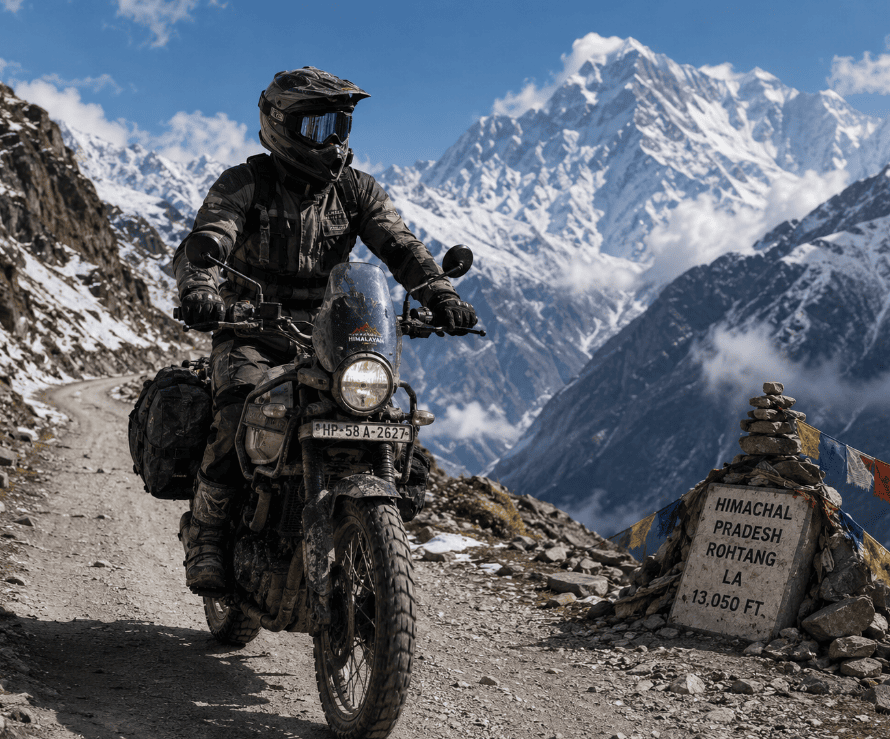
Vroom...Vroom
Some trips are planned on paper. Some are written by the road itself. The Delhi – Manali – Leh – Kargil – Jammu – Delhi circuit belongs entirely to the second kind.
This is not just a road trip. This is a pilgrimage through the spine of India — through mountains that touch the heavens, through valleys that hold centuries of silence, through roads that test everything you think you know about yourself. Strap in. This one is for keeps.
Delhi — Where It All Begins
Every great adventure has a humble beginning. Ours starts in the beautiful chaos of Delhi — the city that never truly sleeps, never truly quiets, and never lets you leave without a story.
The night before departure, the excitement is electric. Maps are checked one final time. Bags are repacked. The motorcycle is fuelled. And somewhere between the last cup of chai and the first breath of midnight air, the journey begins in your heart — long before the wheels start rolling.
Delhi to Manali — approximately 570 kilometres of changing landscapes, rising altitudes, and growing anticipation. The plains give way to foothills. The foothills bow to the mountains. And just like that, the world you knew begins to fade beautifully in the rearview mirror.
Manali — The Gateway to the Gods
Manali greets you like an old friend — warm, familiar, and full of promise. Nestled in the Kullu Valley at 2,050 metres, it is the last outpost of comfort before the real adventure begins. The air here already tastes different — crisp, pine-scented, electric with possibility.
Spend a day here. Walk through Old Manali. Sip coffee by the Beas River. Visit the ancient Hadimba Devi Temple, tucked inside a forest of towering deodar trees. Let the mountains ahead call to you slowly — because tomorrow, you answer.
The night before Rohtang, sleep comes reluctantly. The road is waiting.
Manali to Leh — The Most Magnificent Road on Earth
475 kilometres. Two days. A lifetime of memories.
This is it. The road that bucket lists are made of. The Manali–Leh Highway is not a road so much as it is a living, breathing experience — one that demands your complete attention and rewards you with absolute wonder.
Day One — Manali to Jispa/Keylong
The morning begins with Rohtang Pass — at 3,978 metres, your first taste of what lies ahead. Snow-capped, cloud-kissed, and achingly beautiful. But Rohtang is merely the opening act.
Beyond lies Baralacha La at 4,890 metres — where the air thins, the road narrows, and the landscape turns otherworldly. Brown and grey mountains stretch endlessly in every direction. No trees. No settlements. Just raw, savage, spectacular emptiness.
Camp or stay at Jispa — a tiny hamlet by the Bhaga River. Fall asleep to the sound of rushing glacial water and a sky absolutely drowning in stars.
Day Two — Jispa to Leh
This is the day the road truly reveals its soul.
- ⛰️ Nakee La — 4,739 metres. The silence here is absolute.
- 🏔️ Lachulung La — 5,059 metres. You are now above the clouds.
- 🌊 Pang — A flat, surreal valley that feels like another planet entirely.
- 🗺️ More Plains — Miles of high-altitude flatlands that stretch your disbelief.
- 🚩 Tanglang La — 5,328 metres. The second highest motorable pass in the world. The air here is thin enough to make every breath feel earned.
And then — finally, gloriously — Leh appears in the valley below. Like a dream you've been chasing for days, suddenly, magnificently real.
Leh — The Soul of Ladakh
You've arrived. And nothing — no photograph, no travel show, no friend's description — could have prepared you for this.
Leh sits at 3,524 metres, cradled by barren mountains and lit by a sun that feels closer here than anywhere else on earth. The ancient Leh Palace watches over the city like a silent guardian. The Main Bazaar hums with the quiet energy of monks, travellers, and locals going about their beautiful, unhurried lives.
Spend at least three days here. Your body needs acclimatisation. Your soul needs time.
- 🏯 Leh Palace — Modelled on Tibet's Potala Palace, it is history you can touch
- 🕌 Shanti Stupa — Watch the sunset paint the mountains in impossible colours
- 🛕 Hemis Monastery — The largest, most magnificent monastery in Ladakh
- 🌄 Thiksey Monastery — Rise early, witness the monks at morning prayer
- 🏔️ Khardung La — At 5,359 metres, the world's highest motorable road. Stand here and feel genuinely invincible.
- 💧 Pangong Lake — That legendary shade of blue that no camera in the world can truly capture
Leh doesn't just fill your itinerary. It fills something far deeper.
Leh to Kargil — Through the Valley of Warriors and Saints
240 kilometres. One unforgettable day.
Leaving Leh is never easy. But the road to Kargil has its own extraordinary story to tell — and it tells it loudly, beautifully, and with great pride.
The highway follows the mighty Indus River — one of the world's great rivers, rushing silver and fierce through the barren mountains. Every bend in the road reveals a new postcard — ancient monasteries perched on impossible cliffs, tiny villages clinging to hillsides, prayer flags fluttering their colourful blessings into the wind.
Lamayuru Monastery — the Moonland Monastery — emerges from a landscape so lunar, so alien, that you instinctively slow down and stare. This is one of the oldest and most dramatic monasteries in all of Ladakh. The eroded, cave-pocked mountains surrounding it look like something sculpted by a giant, dreaming hand.
And then — Kargil.
At 2,676 metres, Kargil sits at the crossroads of history and heroism. The town is modest and unhurried, but the mountains surrounding it carry the weight of stories — stories of unimaginable bravery, of a nation tested, of soldiers who stood their ground at the top of the world.
Visit the Kargil War Memorial at Dras — the second coldest inhabited place on earth. Stand in silence before the names engraved on stone. Let gratitude wash over you completely.
Kargil reminds you that some roads were bought with a price far greater than petrol.
Kargil to Jammu — Where the Mountains Say Goodbye
490 kilometres. A bittersweet descent.
This is the day the mountains begin to release you — slowly, reluctantly, as if they too are not quite ready to let you go.
The road through Zoji La Pass at 3,528 metres is breathtaking in every sense — steep, narrow, dramatic, and absolutely not for the faint-hearted. Beyond it, the landscape softens gradually. Green returns. Trees reappear. The air thickens with warmth.
Through Sonamarg — Kashmir's golden meadow, glittering with wildflowers and glacial streams. Through Srinagar — the City of Lakes, where shikaras drift lazily across Dal Lake and the world seems to move at the pace of a gentle breeze.
And then the final descent — through the Banihal Pass and the famous Jawahar Tunnel — into the warmth of Jammu, the City of Temples.
Jammu feels like a warm hug after weeks of cold mountain air. The famous Vaishno Devi Temple, the vibrant street food, the colourful bazaars — it is India at its most exuberant, most celebratory, most alive.
Stay a night. Eat well. Sleep long. Because tomorrow, the last road awaits.
Jammu to Delhi — The Return of the Wanderer
600 kilometres. The longest short road you'll ever travel.
The highway back to Delhi is smooth and fast — everything the mountain roads were not. And somehow, that smoothness feels strange now. Your hands still grip the wheel like there's a cliff around every corner. Your eyes still scan every horizon for a mountain pass.
The plains open up wide and flat around you. The heat of the Punjabi heartland settles in. And somewhere on that long, straight road — between Pathankot and Ludhiana, between Ambala and Panipat — it hits you.
You are different now.
Not dramatically. Not obviously. But somewhere in the thin air of Tanglang La, somewhere in the flickering butter lamps of Hemis, somewhere under the galaxy at Pangong, somewhere at the Kargil War Memorial with tears you didn't expect — something shifted. Something settled. Something healed.
Delhi appears on the horizon — its skyline familiar, its chaos welcoming. The circuit is complete. The road has given you everything it promised and more.